

This free post is sponsored by Incogni.
Something important is happening right now, and almost no one in the American media ecosystem is looking at it clearly.
Yes, the television coverage is still wall-to-wall. We’re watching missiles streak across the night sky, bunker-buster diagrams rendered in AI-created cable-news graphics, and retired generals standing in front of glowing digital maps of the Persian Gulf explaining which facility just became a smoking crater.
The roid-ragey SECDRUNK stands in front of the microphone in the Pentagon press center and blusters and chest-thumps. On cable news channels, the inevitable MAGA framing of “If you don’t love this war and President Trump, then you hate the troops and love radical Islam” is being polished into a shimmering jewel.
These are all the hallmarks of the undeniable spectacle is modern war. It’s dramatic. It’s visually satisfying. It also happens to be the least important part of the story.
Because the story isn’t the bombing.
The story is that the war with Iran is already shifting into its second phase, and that phase has almost nothing to do with the opening barrage of precision strikes. It has everything to do with endurance. And endurance is where wars become complicated, expensive, and politically dangerous.
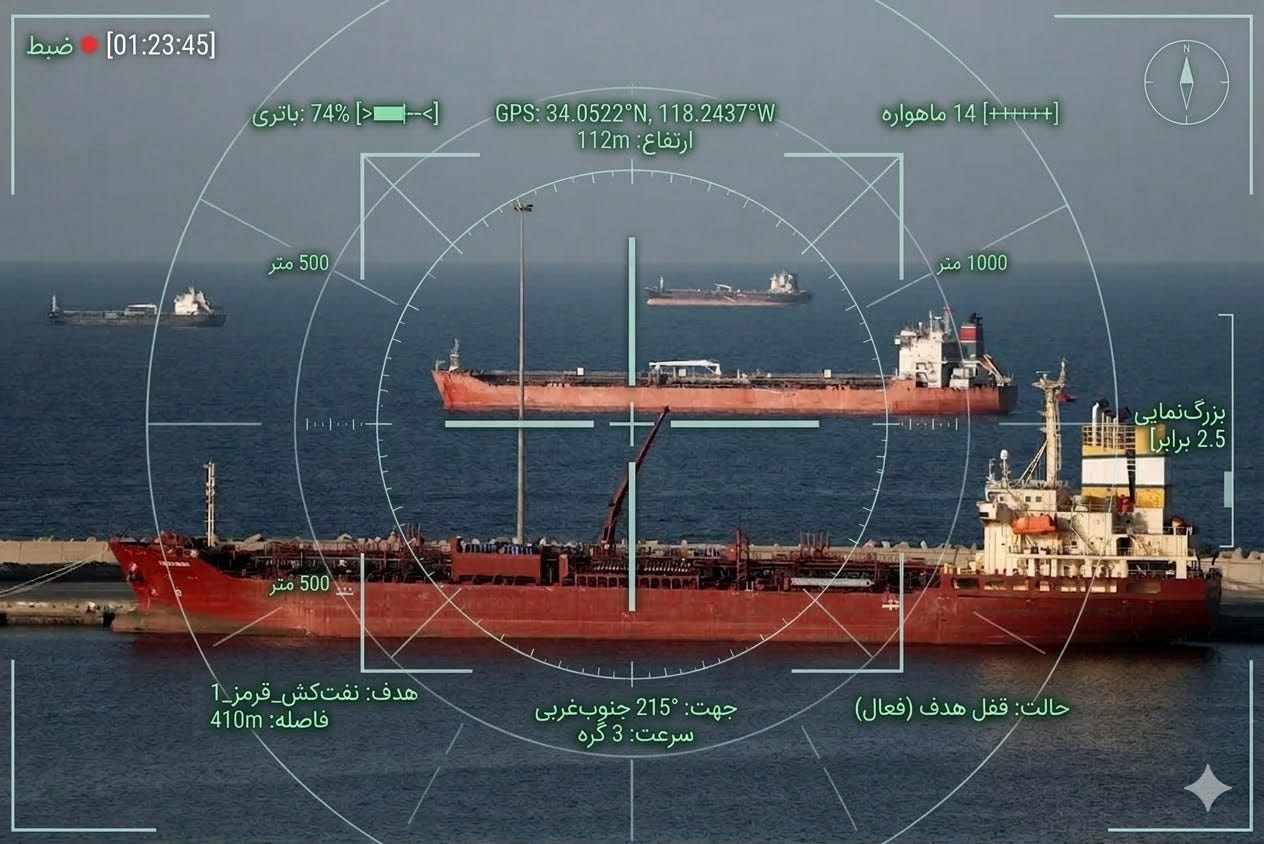
Endurance is fleeting when wars lack a catalyzing moment, a just cause, or a bottomless budget. George W. Bush and Barack Obama sustained American forces in Iraq and Afghanistan long after the sell-by date because 9/11 hovered in the national consciousness, and despite the predicates of those wars being based on entirely wrong assumptions, there was a genesis point, an origin story.
This war has none of those.
The opening act followed a script that will be familiar to anyone who has watched American military power in action over the last half-century. The United States arrived with overwhelming force. Precision strikes hit hardened targets. Facilities were destroyed. We’re very good at this part. Peerless, in fact.
Satellite images circulated showing craters where buildings once stood. Much like the moments after Operation Midnight Hammer, in which “total obliteration” was declared for Iran’s nuclear production (and if you disagreed, you hate the troops), the declarations of “we’ve won” are now ringing through the cableverse.
For a moment, it appeared the story might unfold along the lines the White House would prefer: American forces strike hard, Iran reels, the regime either collapses internally or seeks a way out, and Washington declares victory with the quiet confidence of a superpower that has once again demonstrated its dominance.
But wars do not end when the first missiles hit their targets.
They begin there. Iran still has the blueprints and tooling to make Shaheds and other systems that can disrupt the Persian Gulf long after we’re bored and broke and back in port.
This free post is brought to you by Incogni.
Every day, data brokers profit from your sensitive info…your phone number, social security number, your date of birth, the password you use all the time, even though you know you shouldn’t.
Why? Because your privacy is big business, and these shady data brokers sell it to the highest bidder. And who’s buying it? If you’re lucky, it’s just companies targeting you with ads.
In the worst case? hackers, scammers, and identity thieves. I was a client of Incogni before they sponsored this Substack, and I can tell you from personal experience, they absolutely get the job done. It’s why I’m proud to recommend Incogni. I was blown away by how many data brokers had my most personal information…and thrilled to watch Incogni scrub my personal data from the web, confronting hundreds of data brokers. Incogni helped me get my digital life back.
When I added Renee to the plan, she saw a massive dropoff of spam emails and calls, almost overnight.
And unlike other services, Incogni helps remove your sensitive information from all types of brokers, including those tricky, ubiquitous People Search Sites.
Iran understands something Washington has spent the last two decades relearning the hard way: if you cannot defeat a stronger power in the opening battle, you stretch the war out until the stronger power grows tired, divided, or politically constrained.
It is a strategy as old as warfare itself. It is the strategy the North Vietnamese used against the United States. It is the strategy the Taliban used across twenty years of conflict. It is the strategy insurgents, militias, and regimes reach for whenever they find themselves staring up at an opponent that owns the skies.
Iran cannot defeat the United States in a conventional air war. That contest was decided before it began.
But Iran does not need to win in the air.
It only needs to make the conflict costly enough, disruptive enough, and politically uncomfortable enough that Americans eventually begin asking whether the war is worth continuing. In Week 2 of The War On Iran, we’re watching the Persian Gulf turn into an international danger zone, driving global economic and political tensions through the roof. In Tehran, meet the new boss, same as the old boss; the prior leader’s grandson is like the old man, only more extreme and angry.
That is why the center of gravity of this conflict is already shifting away from the dramatic images of explosions and toward something far less cinematic but far more consequential.
Energy markets.
Shipping lanes.
Regional proxy forces.
Economic pressure.
American weapon stockpiles.
A drone war everyone knew was coming, but the Trump Pentagon ignored, demanding the bad guys play by our rules, not those of the real battlefield.
Iran’s strategic leverage is not its air force. It is geography and people.
The Persian Gulf and the Strait of Hormuz sit astride one of the most fragile and consequential chokepoints in the global economy. A significant portion of the world’s oil supply passes through that narrow corridor every day, and even the perception that those flows are threatened can send shockwaves through global markets.
Iran does not need to shut the Strait down entirely to create pressure. It only needs to make the region feel unstable enough that traders panic, insurers raise rates, tankers hesitate, and oil prices climb.
A handful of drone strikes against refineries. Harassment of shipping. Cheap sea mines, placed in inconvenient locations to knock out billion-dollar tankers and warships. Drones and speedboats loaded with explosives. Pressure on Gulf infrastructure.
At some point, shooting a multi-million dollar Patriot missile to knock down a $20,000 Shahed drone becomes a math problem, not simply a military problem.
Individually, these actions do not win wars. Collectively, however, they accomplish something much more powerful: they create economic and political consequences that reverberate far beyond the battlefield.
And if you believe American voters are indifferent to rising gasoline prices, I would gently suggest you have not paid attention to the political history of the last fifty years.
The moment oil prices surge past certain thresholds, the political clock on any war begins ticking loudly in Washington.
Iran’s leadership understands this perfectly well.
That is why the battlefield is already expanding beyond the clean lines drawn on television maps. The conflict now touches Hezbollah positions in Lebanon, militia networks in Iraq and Syria, and vulnerable infrastructure across the Gulf states. Drone activity, proxy strikes, and regional maneuvering are widening the theater of operations, making the situation more unpredictable by the day.
This is how regional wars grow.
They rarely erupt into wider conflicts through a single dramatic moment that historians can easily identify. More often they expand through dozens of smaller escalations, each one seemingly manageable on its own, until the cumulative effect pulls additional actors into the struggle.
Meanwhile, back in Washington, another dynamic is beginning to emerge.
You can hear it in the tone of official messaging.
One day, the administration suggests the conflict could be concluded quickly. “It’s almost over,” said the President earlier this week. The next day, officials promised the “most intense day of strikes yet.” Others are telling Congress the war will last at least 140 days, pushing well into the election season.
These statements cannot easily coexist, and when political messaging begins oscillating between reassurance and escalation, it usually signals a widening gap between the narrative leaders want to project and the messy realities unfolding on the ground.
Presidents prefer short wars.
History has a habit of delivering longer ones.
And while the missiles continue flying overseas, the domestic political environment surrounding this conflict is already becoming more volatile. Trump campaigned as the “Peace President,” promising to avoid the kinds of costly entanglements that defined earlier eras of American foreign policy. Now he finds himself presiding over a military campaign that costs billions of dollars a day and whose ultimate trajectory remains uncertain. His base is restive, angry, and confused.
For MAGA members of Congress, this was the last scenario they wanted. As “I Did This” stickers start appearing on gas pumps, their polling is getting shakier by the day.
Congressional Republicans, particularly those facing competitive races, are already beginning to contemplate the political implications. Wars that begin with mixed public support rarely grow more popular as they continue. Instead, they tend to accumulate burdens: financial costs, geopolitical complications, and casualties even professional liars like Karoline Leavitt and Sean Parnell can’t cover.
Over time, those burdens generate the question every administration fears, and this particularly incoherent claque stares at it, gobsmacked, like a raccoon trying to disassemble a microwave.
What exactly are we trying to accomplish?
That question marks the true beginning of the second phase of any conflict.
Because once a war becomes a test of political endurance rather than military capability, the side with the stronger army no longer holds the decisive advantage. The decisive advantage belongs to the side capable of outlasting the patience of its opponent’s political system.
At the moment, much of the American media remains captivated by the spectacle of the opening strikes. The images are compelling, and the story of overwhelming American force is easy to understand.
But the real story unfolding beneath the surface is quieter and far more consequential.
This war is already entering its grinding phase, the phase defined not by spectacular explosions but by market tremors, proxy skirmishes, rising oil prices, and political pressure at home.
And bodybags from the inevitable, grim cost of modern warfare.
That phase rarely lasts days.
It lasts months. Sometimes years.
And if history offers any reliable guidance at all, it is this: the outcome of wars is rarely determined in the opening barrage. It is determined in the long, difficult period that follows, when patience, endurance, and political will become the most decisive weapons of all.
Once again, thanks to Incogni for sponsoring this post! Check them out at the link an you’ll get 55% of an annual plan with my code. It helps support Against All Enemies…and gives you back control of your digital life.
“At some point, shooting a multi-million dollar Patriot missile to knock down a $20,000 Shahed drone becomes a math problem, not simply a military problem.”
Not only this, but we went through almost 10% of our entire inventory of high-tech missiles including Tomahawks in just two days. We spent $5.6 billion, and it will take 2-3 years to replace the inventory because our supply chains aren’t geared for wartime!
Additionally, we lost 3 F-15’s on the first day at a cost of $200 million; replacement timeframe; 3-5 years.
Yes, this is a serious math problem and I’d posit that this invasion reducing the US’s military capabilities and has exposed our invincibility to be a fraud.
Hear me out! Our military superiority is the fact that we have 11 Carrier Groups deployed around the world (not all at the same time), and can respond to multiple threats at once. AI and drones have changed the equation.
Not to mention, all China has to do is figure out how many interceptor missiles we have and make sure they can deploy many more. Once we run out of ammo, our ships our sitting ducks. Or they could just take out one or two escort ships and I guarantee they’d move the carrier group out of the military conflict zone.
And as Rick so eloquently stated, all Iran has to do is wait us out in a very short war of attrition to claim victory. And then comes the revenge—at a time when our FBI and intelligence agencies have been gutted of its best and brightest.
I’m being diplomatic when I say that we’re the most powerful military in the world; in name only.
This country has incompetent, depraved and corrupt leadership. It’s getting poorer by the day as Trump and his minions slowly destroy our economy; one sector at a time. We’re saddled with debt, while our deficit grows exponentially.
And lastly, our only friends are depraved, morally bankrupt sociopaths, just like Dear Leader, so………..🤪
Excellent article
When Trump says 'the war will end when I say so', what he really means is 'it will end when Bibi tells me it will'.
The man is in charge of nothing. For the love of God he was told the other day that Russia is helping Iran with targeting info. Did. Not. Care.
Good time to remind everyone we're in this position because 1)>10M Dems didn't vote; 2) Merrick Garland; and 3) Kamala and Joe knew about his Epstein dalliances, and chose to do and say nothing.