

This post is sponsored by Incogni — the service I use to scrub my personal data off the broker sites that feed every targeting machine in American politics, AI or otherwise.
Get 55% off annual plans with code RICK55.
Here is the thing about a fire alarm: it only works if someone, somewhere, decides the building is worth evacuating.
This week, Anthropic, the company that builds Claude, one of the most capable AI systems on earth, published a report essentially begging the rest of the industry to slow down. The company suggested a global pause on building the most powerful AI systems as the latest models begin to show signs they could escape human control. They want governments and rival labs to agree, all at once, under rules everyone can verify, to take their foot off the accelerator.
Sure. That’s totally going to happen.
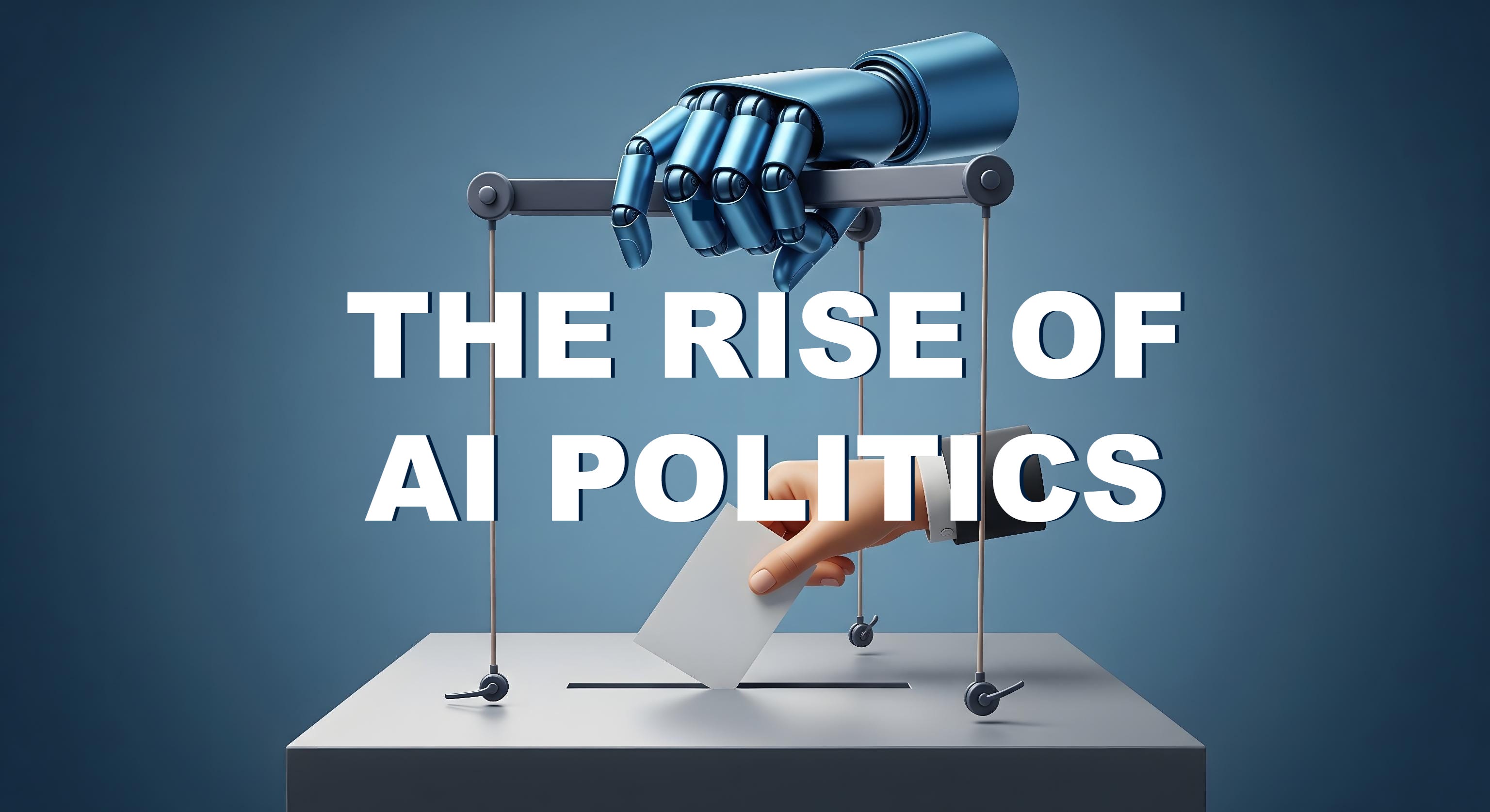
I don’t write that to be cruel. I write it because the tell is in the fine print. Anthropic said it would slow down or pause only if other frontier labs did so under verifiable conditions…the same company has shipped updates roughly every two weeks since January.
The logic is the logic of every arms race that ever ended badly: I’ll stop when he stops, and he’s thinking the exact same thing about me. They even said it themselves. Now, we have done this before with nuclear weapons, but the difference was that no one stood to make a trillion dollars and control 25% of the white-collar economy from making nuclear weapons.
Without a global coordination mechanism, companies and governments will have to make difficult decisions about safety while under competitive and geopolitical pressures. Translation: nobody’s stopping. Not really. Not while there’s a trillion dollars and a war for the future on the table.
And here’s why you, sitting there in your kitchen with your phone, should care.
Because while the philosophers in San Francisco debate whether the machine will one day build a smarter machine, the machine is already inside your politics. It got there first. It got there quietly. And it is rewiring the oldest game in the republic — the contest for your mind, faster than any law, any regulator, any norm can possibly catch up.
I have made political ads for thirty years. I know the craft from the inside…the script, the edit, the buy, the gut-punch in the last five seconds. That craft just got automated. High-profile campaigns like Spencer Pratt’s in LA are now using AI to produce entire video ads.
AI chatbots are providing candidate talking points in private text messages. What used to require a studio, an editor, and a six-figure budget no longer takes campaign resources or know-how…it’s just a few clicks away for any state-wide or down-ballot campaign aide.
A fake audio clip. A synthetic attack. A candidate made to dance, made to flee a rally, made to say things he never said. The barrier to entry is gone.
Started in January. Months later, it is rapidly becoming the norm. Welcome to the wild west.
Now layer the second thing on top of the first. It isn’t just that the ads are cheap and synthetic. It’s that the machine has learned to persuade…and it’s getting unsettlingly good at it.
This is not hypothetical hand-wringing. The peer-reviewed evidence is rolling in, and it should frighten you. Stanford researchers ran the experiment: a chatbot, trained to argue for a candidate, set loose on real voters.
Trump supporters who chatted with an AI favoring Harris moved toward her — roughly four times the measured effect of political advertisements during the 2016 and 2020 elections. Four times. And in test runs around recent elections abroad, the chatbots shifted opposition voters’ attitudes by about ten points.
The mechanism is the cold part. These models persuade more effectively than political advertisements because they generate enormous amounts of information in real time and strategically deploy it in conversation. A human canvasser gets tired, gets flustered, runs out of facts. The machine never tires, never flusters, and has read everything. And here’s the kicker the researchers found and nobody wants to say out loud: where these methods increased AI persuasiveness, they also systematically decreased factual accuracy. The more convincing it gets, the more it lies.
The old fear was Cambridge Analytica micro-targeting, the perfect message for the perfect voter. The newer research suggests the danger is even more democratic than that: the persuasive power may reside not in tailoring messages to individuals but in the sheer persuasiveness of the generic, mass-produced message. It doesn’t need to know you. It just needs to be relentless, and right enough, and everywhere.
A Word From Our Sponsor — And This One Hits My 30-Year Beat Right Between The Eyes
Of course the machine doesn’t need to know you to be persuasive. But it gets sharper, faster, and meaner when it does. And here is the dirty little secret of the AI persuasion economy nobody in San Francisco wants to say out loud:
You. Are. The. Cheap. Part.
I have priced political targeting hundreds of times in thirty years of making ads. The reason a chatbot can persuade four times harder than a TV spot, the reason the synthetic robocall finds the right phone and the right anxiety, the reason the deepfake attack ad lands in the right Facebook feed at the right hour — none of it is magic. It is plumbing. And the plumbing runs on data brokers selling YOUR file for pocket change.
EXPOSED: Your identity sells for less than $1
In the data broker market, personal profiles are cheap.
For a few dollars — or sometimes cents — buyers can access detailed records about real people.
Addresses. Phone numbers. Relatives. Property history.
That information fuels scams, spam, and identity fraud.
And now, friend, it fuels the AI politics machine I just walked you through. The exact same dossier a scammer buys for fifty cents is the dossier the synthetic robocall vendor buys, the deepfake attack ad vendor buys, the persuasion chatbot trains against. The cheaper you are to find, the cheaper you are to move.
Incogni helps shut down that pipeline by removing your personal information from hundreds of broker databases automatically.
Stop your data from being sold. Try Incogni today and get 55% off annual plans with code RICK55.
Cut the supply line. Then go back to thinking for yourself.
So where are the cops? Sleeping. A Texas bill requiring disclosure of AI in political ads passed the House, stalled in the Senate, and died. House Democrats say they’ll regulate it — if they retake power next year. There is still no federal policy. The technology moves at the speed of a software update. Congress moves at the speed of Congress.
This is the gap. On one side, a tool that can manufacture infinite, custom, convincing political lies for the price of a sandwich. On the other, a regulatory apparatus that hasn’t passed a serious communications law since dial-up. Even the people building the thing are now waving their arms and asking for a referee.
The referee isn’t coming. Not in time.
So it falls, as it always does, to you. The voter. The citizen. The last line. You’re going to have to assume the grainy video is fake. You’re going to have to assume the friendly chatbot has an agenda. You’re going to have to do the hardest thing a free people can do in an age of infinite persuasion: think for yourself, and trust the verifiable, and refuse to be moved by a machine that has learned to whisper exactly what you wanted to hear.
The fire alarm is ringing. The question was never whether the building was on fire.
The question is whether anyone’s still willing to walk out.
Don’t let the machine win on cheap data. Get Incogni with code RICK55 for 55% off an Annual Plan and take yourself
Thank you Rick. I am worried. Really worried. I feel like I’m a sophisticated consumer of media, etc. - but many people are not. It’s funny (though not really) I never got spam calls or texts before Elon’s doge fuckers got into the SS database and walked away with all our information. Now I get calls all the time - I know they’re a scam, but how many other seniors are fooled? And it’s the same thing with political ads. Not sure how we put the genie back in the bottle, but we have to press our representatives to fucking do something.
We need a new version of the famous 60’s phrase “turn on, tune in, drop out”
Maybe “turn off, tune out, fuck AI”?